


Esports has long moved beyond simple entertainment and has become a full-fledged model of team management studied in business and education. The leaders of major organizations work with players as carefully as managers in traditional sports. Under constant pressure and fast-paced competition, unique approaches to communication, role distribution, and motivation are formed. In my view, esports demonstrates what modern teamwork should look like: flexible, fast, and focused on growth. And examples from CS2, League of Legends, and Valorant organizations clearly prove this.
Effective Leadership in High-Speed Environments
In esports, decisions are made within seconds, and this directly shapes the leadership style. Coaches and managers operate in conditions where any detail can change the outcome of a match: map choice, early-round strategy, or role distribution among players. In disciplines like CS2 or Valorant, successful leaders combine strategic vision with the ability to make rapid adjustments in the moment. Their work often resembles crisis management far more than traditional sports coaching.
Professional organizations frequently rely on a micro-leadership approach: coaches monitor the emotional state of the roster, regulate the pace of communication, and offer concrete solutions during practice sessions. This helps stabilize players under pressure, especially in Bo3 or Bo5 formats, where emotional swings are felt most intensely. And this is why media analysis has become an essential part of understanding team dynamics. For example, analytical pieces on cs2 betting tips in the middle of the news cycle illustrate how leaders adjust strategy, manage round economy, and structure internal communication.
To me, this combination of fast decision-making, flexibility, and emotional competence makes esports leadership a model for the future. A leader here can’t just set direction — they must be part of the process, react alongside the players, and adapt to the match’s momentum. This management style transfers easily to regular work teams: the faster the environment changes, the more valuable the leader who can support the team, provide clarity, and maintain stability under pressure.
Internal Communication as a Resource for Victory
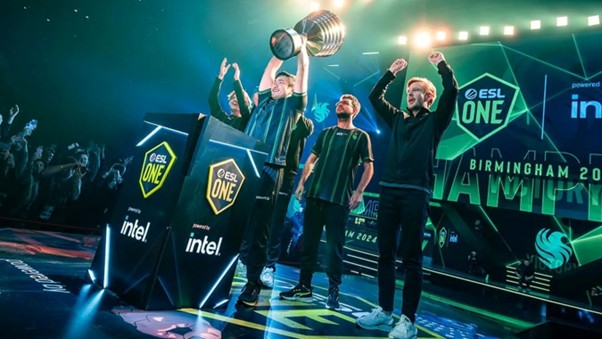
Esports teams succeed not just through individual skill — structured communication is key. In games like Dota 2, Rainbow Six Siege, or League of Legends, it’s often team coordination that decides the outcome. Players exchange info on positions, cooldowns, map control, and economy using short, predefined phrases to reduce chaos and stay focused under pressure.
Top teams even build their own internal language — code words, action templates, and signals. In Dota 2, preset commands trigger fights or retreats; in Rainbow Six Siege, there are standard terms for entry points; and in League of Legends, quick signals replace lengthy talks to execute plays instantly. This approach lowers cognitive load and speeds up decisions.
It’s a model easily applied to regular workplaces. Long chats, vague roles, and unclear tasks kill efficiency. Esports proves that streamlined communication, clear responsibilities, and a shared system can massively boost team performance — in games and beyond.
Building Trust and Resilience
In any esports organization, psychological resilience is key. Players operate under constant pressure — fan criticism, tight schedules, the need to stay sharp, and coping with losses. Coaches and managers create environments where trust matters more than individual mistakes. This helps teams avoid dwelling on failure and stay focused, even after intense matches.
In games like Apex Legends, CS2, or Valorant, we often see teams bounce back almost instantly. After a lost round, they regroup, briefly analyze the mistake, adjust — and move on. This “short recovery cycle” works like a streamlined workflow: no blame, just clear feedback and forward motion. It’s more than a tactic — it’s a mindset.
To me, this shows what many workplaces lack. In traditional companies, mistakes often lead to stress, blame, or endless discussion. Esports offers a better model: quick adaptation, emotional control, and mutual trust. That’s what builds true resilience and a healthy, decision-friendly work culture.
Role of Analytics and Support
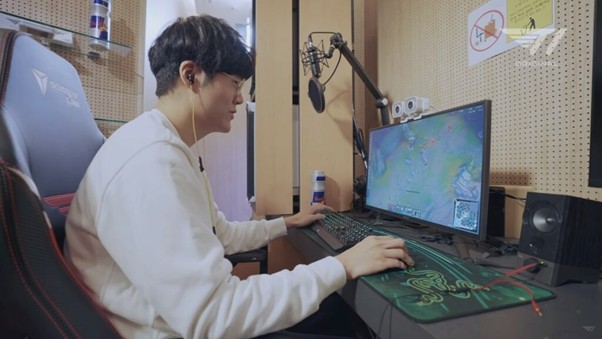
The modern esports scene relies not only on players — behind every top team stands a full system of specialists. Analysts, psychologists, communication coaches, and physiology experts work together to ensure consistent, high-level performance. In games like League of Legends or Overwatch 2, support staff analyze countless match hours, track timings, study opponent habits, and predict individual playstyles. This isn’t intuition — it’s data-driven decision-making.
To me, esports clearly shows how powerful analytics can be when properly structured. Teams use tracking tools and telemetry to find micro-advantages: weak points, awkward timings, early-game mistakes. This data-focused mindset translates well to business — decisions backed by facts are simply more effective.
The role of support staff is also crucial. Psychologists help manage stress, especially before key matches. Communication coaches improve team interaction under pressure. Together, they build a stable environment where talent and discipline are reinforced by a strong support system — the foundation for long-term success.
Adaptability as the Key to Growth
Esports exists in an environment where changes happen so quickly that any stability is temporary by definition. Patches drop weekly, balance tweaks roll out constantly, maps get reworked, abilities are adjusted — and all of it affects a team’s strategy instantly. In games like Fortnite, Dota 2, or Valorant, the meta can completely shift within a single month, and sometimes even overnight after a major update. For players, this means only one thing: continuous learning and the ability to change familiar decisions literally on the fly.
In my view, this constant dynamism makes esports the perfect model for modern leadership. You simply cannot rely on old frameworks — every update forces teams to rethink roles, interactions, and risks from scratch. Coaches and captains must not only react to these changes, but leverage them as an advantage: discovering new strategies, adjusting training processes, and distributing responsibilities so players feel confident in the new environment. This ability — to change strategy without resistance — becomes essential not only in games, but in any field where the pace of events is high.
What’s especially important is that adaptability in esports isn’t treated as a crisis. It’s a natural part of the process, built into the culture of the discipline. Teams that can quickly restructure themselves remain more resilient and perform better in the long run. And this same approach transfers seamlessly into real-world work environments: flexibility, willingness to learn, and the capacity to adjust quickly to new conditions become not just advantages, but the foundation of sustainable growth.
Conclusion
Esports demonstrates that real team strength is built on a combination of flexibility, analytics, trust, and clear communication. Esports organizations are inspiring because they transform the chaos of a competitive environment into a structured system where every member knows their role. In my view, these exact principles will define effective teamwork in the future — not only in games, but in real-world workplaces as well.