

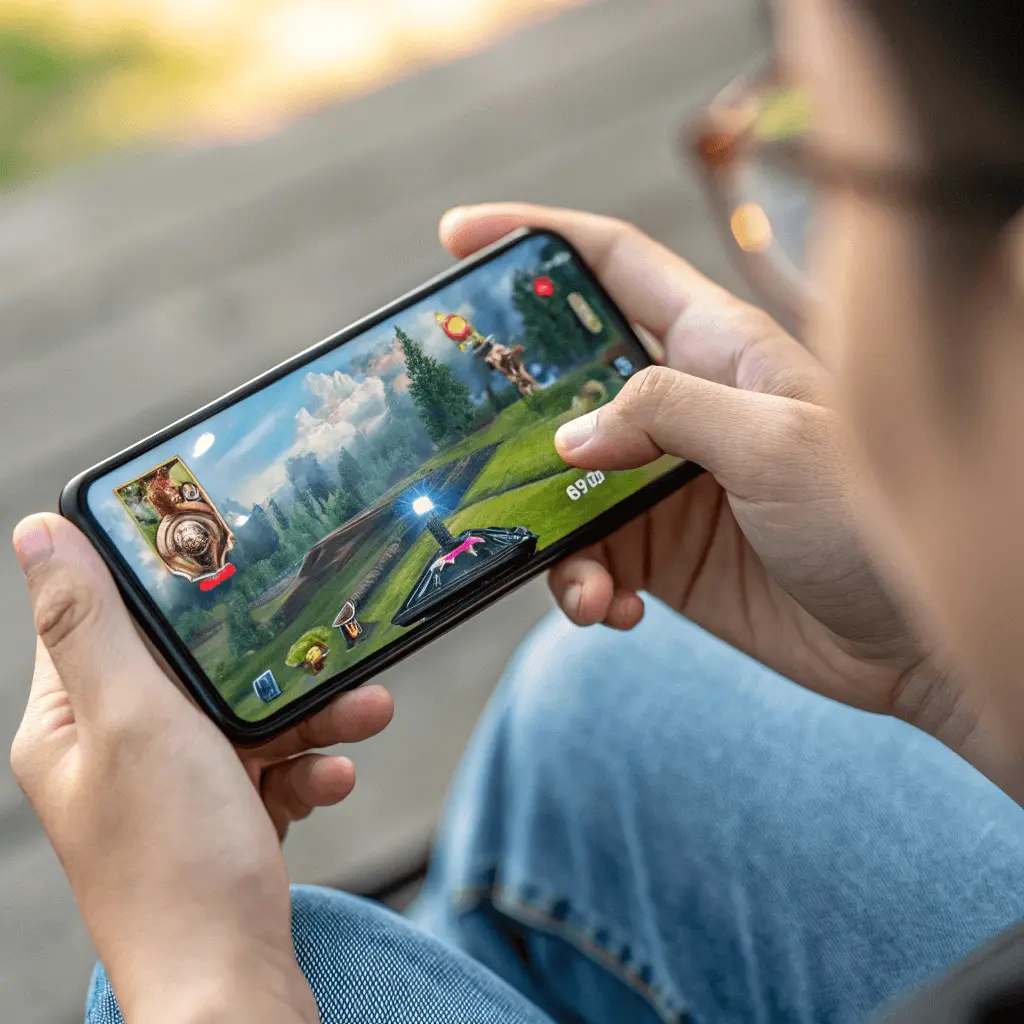
Not long ago, playing a proper online game required a desktop computer, a decent connection, and enough uninterrupted time to make the whole setup worth it. The experience was good when it worked, but the friction was real – you had to go to the game, in a specific place, at a specific time. The phone changed that logic entirely, and what replaced it is not just a more convenient version of the same thing. It is a fundamentally different relationship between people and interactive entertainment, one built around availability rather than occasion.
The shift happened quickly enough that many people did not consciously notice it. One year you occasionally played games in the evening. A few years later you were playing in waiting rooms, on public transport, between meetings, during the minute before the microwave finishes. The game had followed you. What made this work technically – beyond the obvious hardware improvements – was the maturation of app delivery systems. The ability to install something in under a minute, have it run reliably on whatever device you own, and pick up exactly where you left off regardless of interruption: these are not small engineering achievements. They are the invisible infrastructure that made mobile gaming genuinely ubiquitous. The aviator spribe download experience demonstrates this well – the friction between discovering a format and actually playing it has collapsed to almost nothing, which means the platforms that get the first thirty seconds right now retain users that older delivery models would have lost during a five-minute installation process. Speed of access has become a competitive variable that rivals the quality of the content itself.
The device in the pocket changed everything about who plays
The original video game audience was defined partly by who had access to the hardware. Consoles and gaming PCs were not cheap, the culture had a narrow demographic profile, and the investment required created natural limits on who the medium reached. Smartphones dissolved most of those limits almost by accident. The device people bought for communication happened to be the most capable gaming platform ever distributed at mass scale.
This broadened the audience in ways that surprised even the platforms benefiting from it. Demographic groups that had shown little interest in traditional gaming – older adults, people who had never identified as gamers, users in markets where consoles were prohibitively expensive – turned out to have genuine appetite for interactive entertainment when the access barrier was low enough. The formats that worked best were not simplified versions of existing games. They were new things designed around how these users actually behaved: short sessions, minimal learning curves, immediate engagement.
| Barrier to entry | Desktop/console gaming | App-based gaming | Change in accessibility |
| Hardware cost | High ($300-$1500+) | Near-zero (phone already owned) | Massive reduction |
| Installation time | Minutes to hours | Under 60 seconds | Near-elimination |
| Session commitment | Long (30+ min typical) | Flexible (2-30 min) | Fully adaptable |
| Geographic availability | Limited by retail/infrastructure | Global, immediate | Universal |
| Technical knowledge required | Moderate | Minimal | Significant reduction |
What the platform layer actually does
The app store model is so familiar now that it is easy to forget how much it changed. Before centralized app distribution, software reached users through retail boxes, direct downloads, or physical media. Each had gatekeeping, logistics, and failure modes. The modern app platform replaced all of that with a single, frictionless distribution point handling payment, updates, and discovery simultaneously.
For gaming specifically, this created something that had not previously existed: a surface where a user could find, evaluate, and start playing something new within two minutes. Discovery and consumption collapsed into the same moment. The impulse to try something could be satisfied immediately, removing the window in which most impulses dissolve. The update mechanic deserves attention. Games before centralized distribution aged badly – patches were complicated, version fragmentation common. Automatic updates changed this. A game can evolve continuously while the player’s experience stays consistent. The thing they enjoyed three months ago is still there, but better.
Why session flexibility matters more than session length
The most significant behavioral change app-based gaming enabled is not that people play more. It is that they play differently. The modern pattern is frequent, short engagement rather than infrequent, long engagement. Users check into a game the way they check other apps – multiple times a day, for variable durations, without feeling they need to accomplish something substantial first.
This changes what success looks like for designers. A game someone plays for four minutes twelve times a week is performing extremely well by mobile standards, even if those numbers would have looked like failure in earlier contexts. Designing for that pattern means creating experiences satisfying at any length, not just when played to conclusion. Every session needs to feel complete in itself.
That constraint has produced genuinely inventive design thinking – and it has made gaming, for the first time, something that fits how most people actually live.