

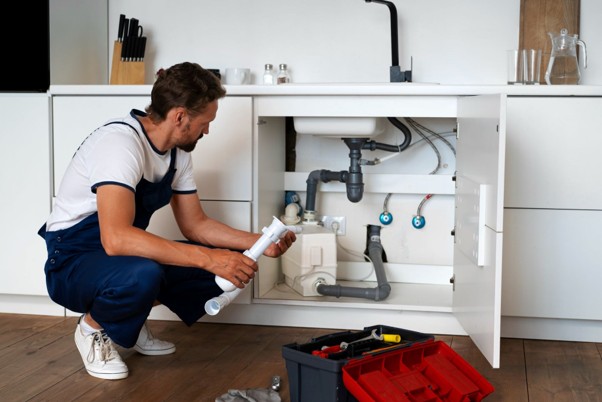
Most homeowners don’t think about their sewer line until something goes wrong. Then suddenly you’re standing in your backyard being told your pipe has collapsed, and you need to make a decision fast. Contractors who handle plumbing alongside HVAC and electrical work, the kind you’d contact to schedule plumbing service for a routine inspection, often say that sewer line repairs catch people completely off guard, both in terms of process and price. San Jose sewer service providers report the same pattern: customers show up with no idea there were even two methods to choose from.
That’s the gap this article is trying to close. Both trenchless and traditional repair work. The real question is which one works better for your specific situation.
Comparing Upfront and Long-Term Costs
Traditional excavation is time-consuming. The repair requires a trench to be dug along the full length of the damaged pipe, requiring equipment rental, additional man-hours and a lot of interruption before the actual work can even commence. Traditional sewer repair services price between $50 and $250 per linear foot – and that’s before you consider landscaping restoration, road patching or replacing a deck that just happened to be above the line.
Trenchless methods, pipe lining and pipe bursting typically cost more per linear foot upfront, somewhere in the $80–$250 range depending on pipe diameter and access conditions. But you’re not paying for a crew to undo and redo your yard. Over a 10-year horizon, trenchless often ends up cheaper once restoration costs are counted.
How Long Does Each Repair Method Take?
Speed is one of trenchless repair’s clearest advantages. Most jobs are completed within a day or two. Traditional excavation takes at least three to five days, and that time frame is lengthened if the damage is serious, long or complicated by subsurface utilities.
If you have a sewage backup and a household that can’t operate, that’s not an insignificant distinction.
Property Damage and Disruption Compared
This is where traditional repair really stings. Excavation means trenches, sometimes 4 to 6 feet deep, running 20 or 30 feet through your yard. Trees get removed. Driveways crack. Garden beds disappear. The pipe gets fixed, and then you spend weeks or months dealing with everything else.
Trenchless methods need only one or two small access points. Your grass stays mostly intact. The driveway survives. If sewage maintenance is a common issue on your site, trenchless methods save the surrounding infrastructure, which would otherwise be disturbed with each repair cycle due to aged pipes, root incursion and shifting soil.
Performance, Lifespan, and Reliability
Cured-in-place pipe lining (CIPP) creates a seamless epoxy sleeve inside the existing pipe. No joints, no seams, which means fewer places for roots to re-enter or sediment to catch. The expected lifespan is 50 years or more when installed correctly. Traditional sewer replacement with new PVC pipe also performs well, and in some cases offers a larger effective diameter. Both methods, done right, are durable. Neither has a dramatic edge in pure performance terms.
Situations Where Trenchless Repair May Not Be the Best Choice
Trenchless isn’t a universal fix. A severely collapsed pipe, not just cracked, but fully caved in, may not hold a liner or allow a bursting head to pass through. Extremely offset joints or pipes with major root intrusion throughout the run can also complicate or rule out the trenchless option. Pipe diameter matters too; very small or unusually large pipes sometimes fall outside what standard trenchless equipment handles well.
When the pipe’s structural integrity is too far gone, traditional excavation remains the more reliable path.
Environmental Impact of Sewer Repair Methods
Less excavation equals less soil disturbance, less fuel for the equipment and less construction trash. Trenchless solutions greatly minimize the carbon footprint of a sewer repair: fewer truck trips, no carrying excavated material away and no demolition trash. That isn’t the decisive decision for most homeowners, but it is a valid concern, particularly in neighborhoods where tree canopy and permeable ground cover matter.
How to Choose the Right Sewer Repair Method for Your Situation
Start with a camera inspection. No reputable contractor should be quoting sewer repair services without one. The footage tells you pipe material, damage type, depth, and length. From there, get quotes for both methods and ask each contractor to break down the full cost, including restoration. Don’t just compare line-item repair costs.
If your pipe is partially intact and access is reasonably straightforward, trenchless is almost always the better choice. If it’s collapsed or deeply damaged along a significant stretch, traditional excavation or full sewer replacement may be necessary regardless of preference.
In Conclusion
The best method is the one that matches the actual condition of your pipe, not the one that sounds more modern or costs less on paper. Get the camera inspection. Get both quotes. Then decide with full information in hand rather than under pressure.